04 · OEM hardware support
Vendor-neutral engineering for the OEM hardware you run.
You buy OEM and third-party hardware — drives, sensors, controllers, instrumentation, embedded modules — and someone still has to get it integrated, configured and commissioned into the systems you already run. 1722 is the independent, vendor-neutral engineering support for that hardware across its lifecycle: integration into existing systems, lines and estates; configuration and commissioning through to acceptance; and lifecycle support — diagnostics, root-cause and end-of-life planning — as it ages.
Engineering time applied to the hardware you have chosen or already own — we integrate and commission it, not resell it.
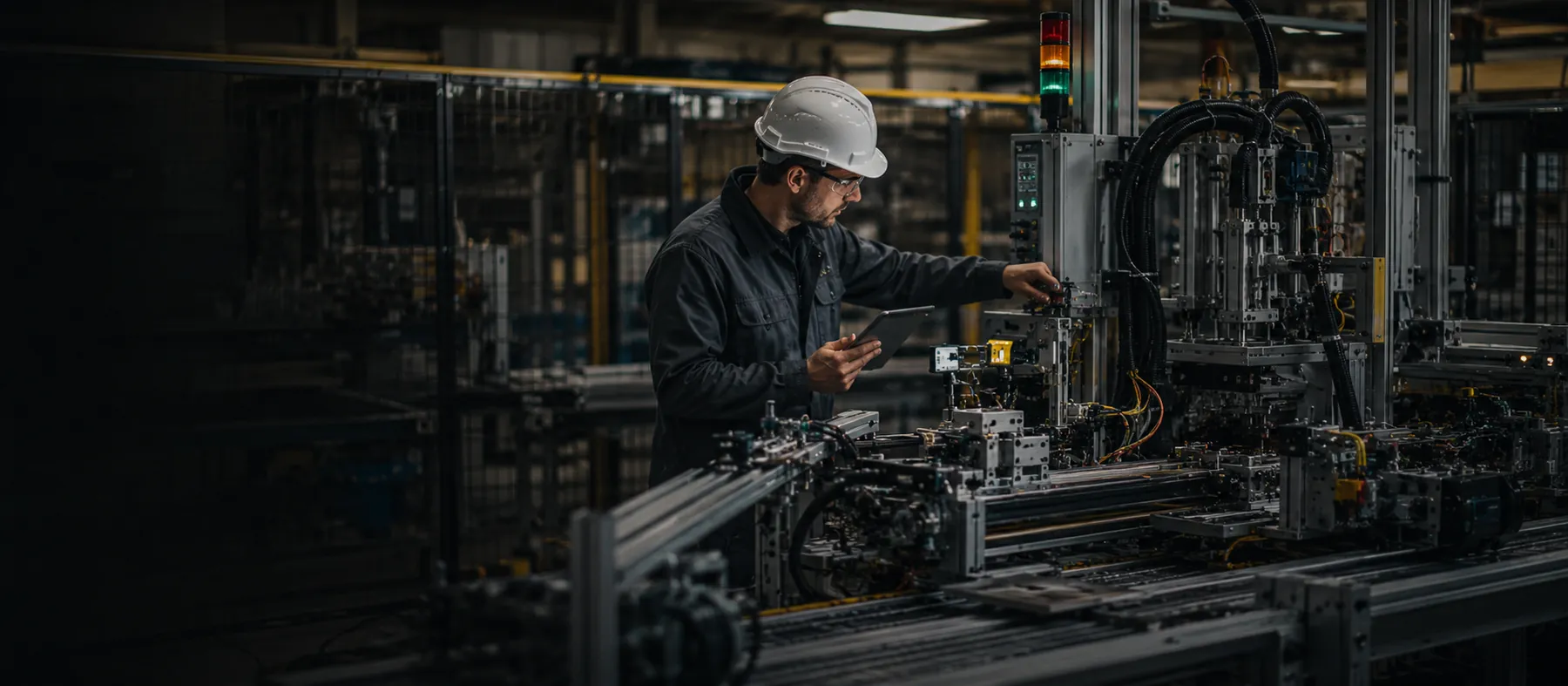
What we do
Four jobs across the hardware lifecycle.
Available as a single work package or staged across the life of the equipment.
- 01
OEM/third-party hardware integration
Bringing third-party equipment into existing systems, lines and estates — wiring, interfacing and configuration reconciled against the equipment already in place.
- 02
Configuration & commissioning
Bring-up, test, acceptance and go-live — taken from unboxed hardware to a signed-off, working part of the line.
- 03
Lifecycle support
Diagnostics, root-cause analysis, redesign/refresh, and end-of-life or migration planning as OEM hardware ages or a supplier changes.
- 04
Interfacing to controls, data & infrastructure
Connecting OEM hardware to the controls systems, data pipelines and infrastructure around it, so the device output is usable, not just installed.
What you get
Deliverables you own.
Every engagement ships concrete artefacts your team keeps — never advice alone.
- Commissioning reports — bring-up, test and acceptance records against agreed criteria
- Integration & configuration documentation — wiring, settings and interface detail as built
- Diagnostic & root-cause records where lifecycle or fault-finding work is in scope
- Handover pack — documentation and training so your team can operate and maintain the hardware independently
Where it sits
The bridge between the other three lines.
OEM hardware rarely stays inside one discipline. A conveyor drive or sensor is also a warehouse controls problem; an embedded module bought in from a third party is also an electronics integration problem; the data a device produces is also a question for the infrastructure it feeds into. This line is the engineering that sits at those points of contact — commissioning the physical hardware and interfacing it correctly to the controls, data pipelines and infrastructure it needs to talk to. It is frequently scoped alongside warehouse systems engineering, electronics & embedded systems or infrastructure architecture work, rather than as an isolated piece.
Out of scope — this is not hardware resale or distribution, not a warranty/RMA desk, and not an ongoing managed-support or helpdesk contract. Each engagement is scoped per project or work package against a written statement of work, with clear acceptance criteria and a defined end.
Point us at the hardware.
Tell us what needs integrating, commissioning or diagnosing. A short discovery call, then a scoped work package.
FAQ
OEM hardware support, answered.
Do you sell or resell the hardware you support?
No. We do not sell, distribute or resell OEM or third-party hardware, and we take no vendor commissions. We are engaged for the engineering work of getting hardware you have already bought — or are choosing between — integrated, configured, commissioned and supported through its lifecycle. That independence means the recommendation follows your system, not a supplier line.
What kind of OEM hardware does this cover?
Third-party controllers, drives, sensors, instrumentation, embedded modules, materials-handling and controls hardware, and similar OEM equipment being brought into an existing system, production line or facility estate. If it needs to be integrated, configured, commissioned or diagnosed rather than built from scratch, it sits in this line.
How is this different from a warranty or RMA desk?
A warranty/RMA desk exists to process faulty units back to the manufacturer. We are engaged for the engineering around the hardware — bring-up, integration, commissioning, diagnostics and root-cause work — not as a returns process. Where a fault does trace back to a warranty claim, our documentation is what makes that claim easy to make; we do not run the claims desk itself.
Is this an ongoing managed-support or helpdesk contract?
No. Each engagement is scoped as a project or work package with a defined start, acceptance criteria and end — day-rate, time-and-materials or fixed-scope against a written statement of work. There is no standing helpdesk, ticket queue or support-contract lock-in; a further work package is a deliberate, separate decision, not an auto-renewal.
What do I actually receive at the end of an engagement?
Commissioning reports and test records, configuration and integration documentation, and a handover pack written so your own team can operate and maintain the hardware independently. Deliverables are named in the statement of work before the work starts, not assembled after the fact.
How does this connect to the warehouse, electronics and infrastructure work?
OEM hardware rarely sits in isolation — it is a drive or sensor feeding a warehouse control line, a module feeding an embedded design, or a device whose data needs to reach the infrastructure and pipelines around it. This line is the engineering bridge at those points of contact, and it is often scoped alongside the warehouse systems, electronics or infrastructure lines rather than as a stand-alone piece of work.
Who typically brings you in?
Operations, engineering and facilities leaders integrating third-party hardware into a system, line or estate they already run — commissioning new equipment, diagnosing a hardware fault that keeps recurring, or planning a redesign, refresh or end-of-life migration for kit that is aging out.